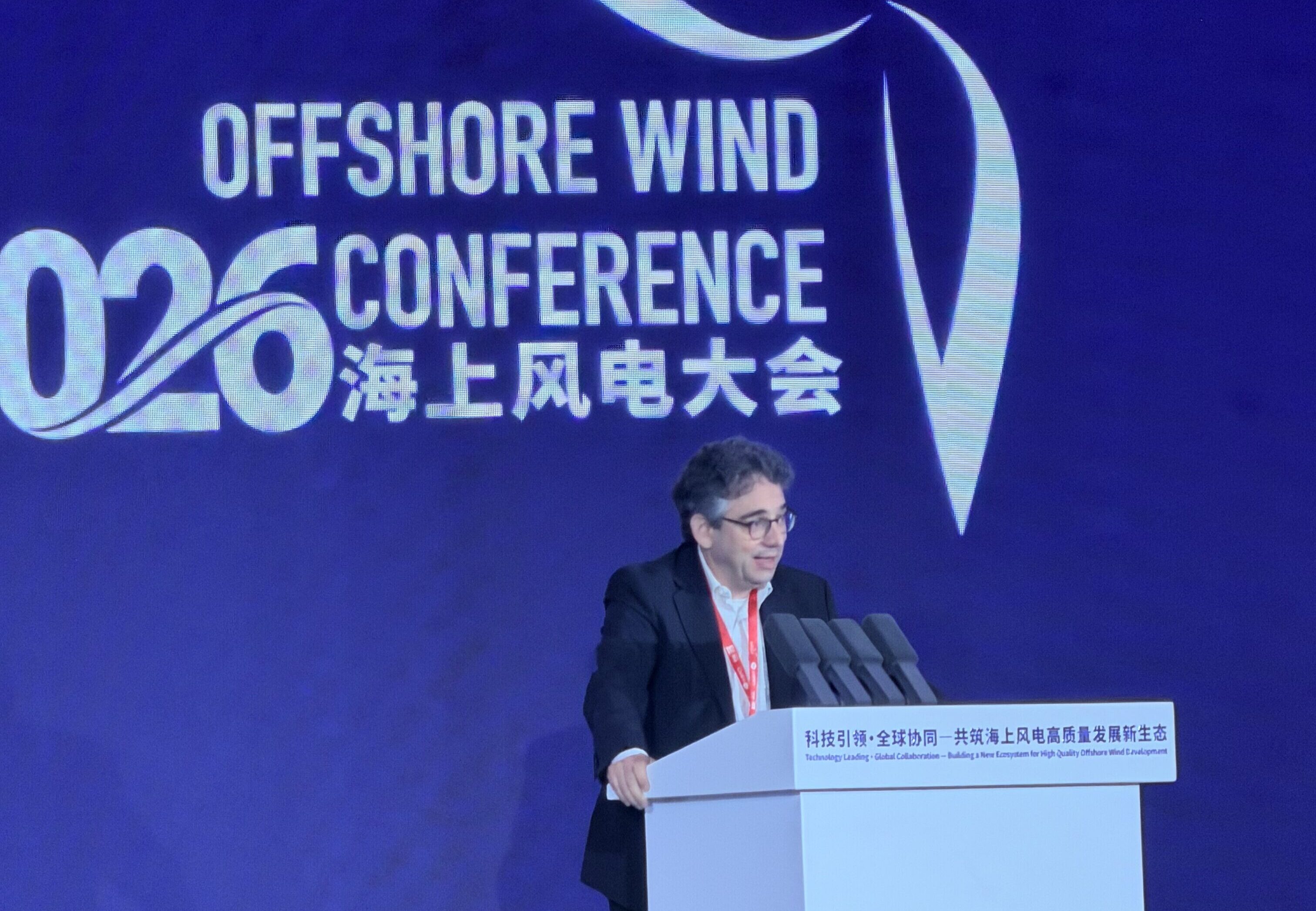
Stefan Gsänger, Secretary General of the World Wind Energy Association (WWEA) at the Offshore Wind Conference 2026.
At the Offshore Wind Conference 2026 held in Shanghai Hongqiao, New Energy Nexus (NEX) China had an open and insightful conversation with Stefan Gsänger, Secretary General of the World Wind Energy Association (WWEA).
As one of the most experienced global advocates in the wind energy sector, Stefan has worked in the energy transition field for more than 25 years. He has been actively engaged across Europe, Asia, Central Asia, and Africa, promoting international collaboration, community energy development, and the vision of 100% renewable energy. During the nearly two-hour discussion, we went beyond wind power technologies and explored the evolving global energy landscape, China’s changing role, and future directions for international cooperation.
In Stefan’s view, the global energy transition has entered a new phase. In the past, the focus was on who possessed more advanced technologies; today, a more important question is who can build comprehensive energy system capabilities.
This shift is particularly evident in China. Over the past decade, China has grown from a follower in clean energy technologies into one of the world’s most important players. Across wind power, solar PV, energy storage, and electric vehicles, China has not only built a complete supply chain but has also rapidly accumulated experience in market deployment.
However, Stefan believes China’s future role should not stop at being a technology supplier. Chinese companies need to gradually shift from an export-oriented mindset to a global partner mindset. This means exporting not only equipment, but also system integration capabilities, business models, project experience, and the practical wisdom accumulated throughout the energy transition.
One idea resonated strongly throughout the discussion: China is not only a global manufacturing hub for clean energy technologies, but also a vast living laboratory.
A large market, abundant data, and rapid industrial iteration are constantly validating new energy solutions.
From electric vehicles and zero-carbon industrial parks to renewable energy integration and new power systems, many innovations are being deployed first in China.
These experiences are gradually becoming an important form of China’s soft power in the global energy transition. For emerging economies that are still building out their energy infrastructure, they offer valuable lessons.
Stefan pointed out that, unlike Europe, which is primarily replacing existing energy systems, many countries in Asia and Africa have the opportunity to build new energy systems from the ground up. Under such circumstances, China’s experience becomes even more transferable.
Stefan repeatedly emphasized that the energy transition is fundamentally a social transformation.
Across Europe, more community energy projects are emerging. In some cases, wind farms have been converted from traditional development models into cooperatives, allowing local residents to participate in investment, decision-making, and benefit sharing.
This not only improves public acceptance but also ensures that ordinary people benefit directly from the transition. Similar explorations are now taking place in China. More and more rural renewable energy projects are enabling local residents and village collectives to become participants and beneficiaries rather than bystanders.
During the conversation, we also shared NEX China’s casebook ‘Small Money, Big Change’, which features innovative renewable energy financing models in rural China. One example from Dalad Banner in Inner Mongolia particularly caught Stefan’s attention: local villagers and herders invested in a distributed wind power project and gradually transformed from traditional energy consumers into beneficiaries of renewable energy revenues. Stefan expressed strong interest in these cases and hoped to read the full casebook.
In his view, these community-rooted practices that balance economic development with the energy transition carry value not only for China, but also for many other countries.
Perhaps, more than grand narratives, these real stories happening in villages, communities, and ordinary people’s lives can become a window through which the world better understands China’s energy transition.
Despite a complex international environment, Stefan remains optimistic. He believes that the most promising opportunities in the future may not emerge in mature markets, but rather through new forms of collaboration among emerging markets.
Central Asia is a prime example.
Countries such as Kazakhstan possess abundant wind resources and vast land areas, yet they still require support in financing mechanisms, industrial ecosystems, and international resource mobilization.
Stefan expressed strong interest in exploring future collaboration pathways between WWEA and NEX China.
This also points to a ‘golden triangle’ model worth exploring over the long term: a new cooperation network that brings together European industry organizations and ecosystem enablers, China’s mature technologies and solutions, and the practical needs of emerging markets.
In this model, Europe contributes international networks and industry expertise, China provides market-proven technologies and system solutions, and emerging markets become new spaces for innovation and green industrial development. China is no longer merely an equipment exporter, nor is Europe solely a rule-maker; together, they can become enablers of the energy transition in emerging economies.
Across Central Asia, Southeast Asia, and the broader Global South, this cross-regional collaboration has the potential to create jobs, cultivate local green industries, and promote a more inclusive and sustainable development model. In many ways, this represents the next stage of global energy cooperation: a shift from one-way export to co-creation.
Toward the end of the discussion, we touched upon a shared concern: how can the world better understand China?
Stefan acknowledged that misconceptions about China’s renewable energy sector still exist in some developed economies. At the same time, more entrepreneurs, businesses, and local institutions from emerging and developing countries are actively seeking opportunities to work with China.
Their focus is not geopolitics, but a more practical question: how to achieve a faster, more efficient, and more affordable energy transition.
Perhaps China’s most important export in the next decade will no longer be equipment and products, but real stories – stories about innovation, collaboration, and enabling more people to participate in the energy transition.
Organizations such as NEX and WWEA, as ecosystem builders, are becoming important bridges connecting countries, industries, and communities.
In the next decade, a more important question than who possesses the most advanced technology may be: who can create the future together with more partners? Because the energy transition is never a one-country performance. It is a long-term endeavor that requires global collaboration.
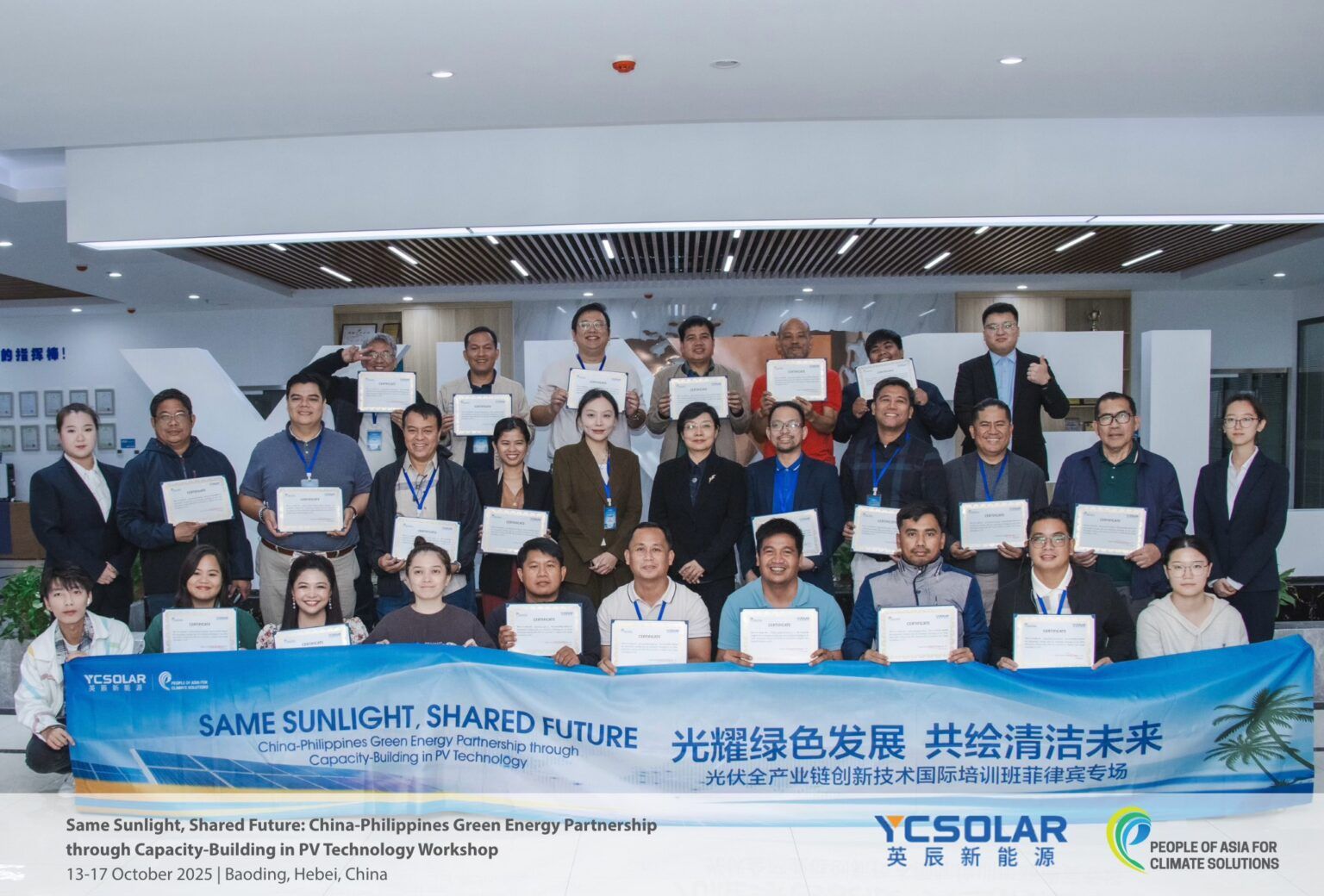
Photo from the People of Asia for Climate Solutions (PACS) Facebook page
Manila, Philippines, 29 October 2025 – As part of its goal to strengthen renewable energy cooperation between China and the Philippines, New Energy Nexus in partnership with the People of Asia for Climate Solutions (PACS), through the Climate Actions in Renewable Energy (CARE) Project, hosted solar training partners and program alumni in the Solar Photovoltaic (PV) Workshop held in China from October 13 to 16, 2025.
The four-day workshop immersed participants in the latest developments in solar PV technologies with one of China’s pioneering solar panel manufacturers. The sessions also provided insights into emerging trends in distributed renewable energy (DRE), solar manufacturing, and potential areas for collaboration between Chinese and Philippine enterprises.
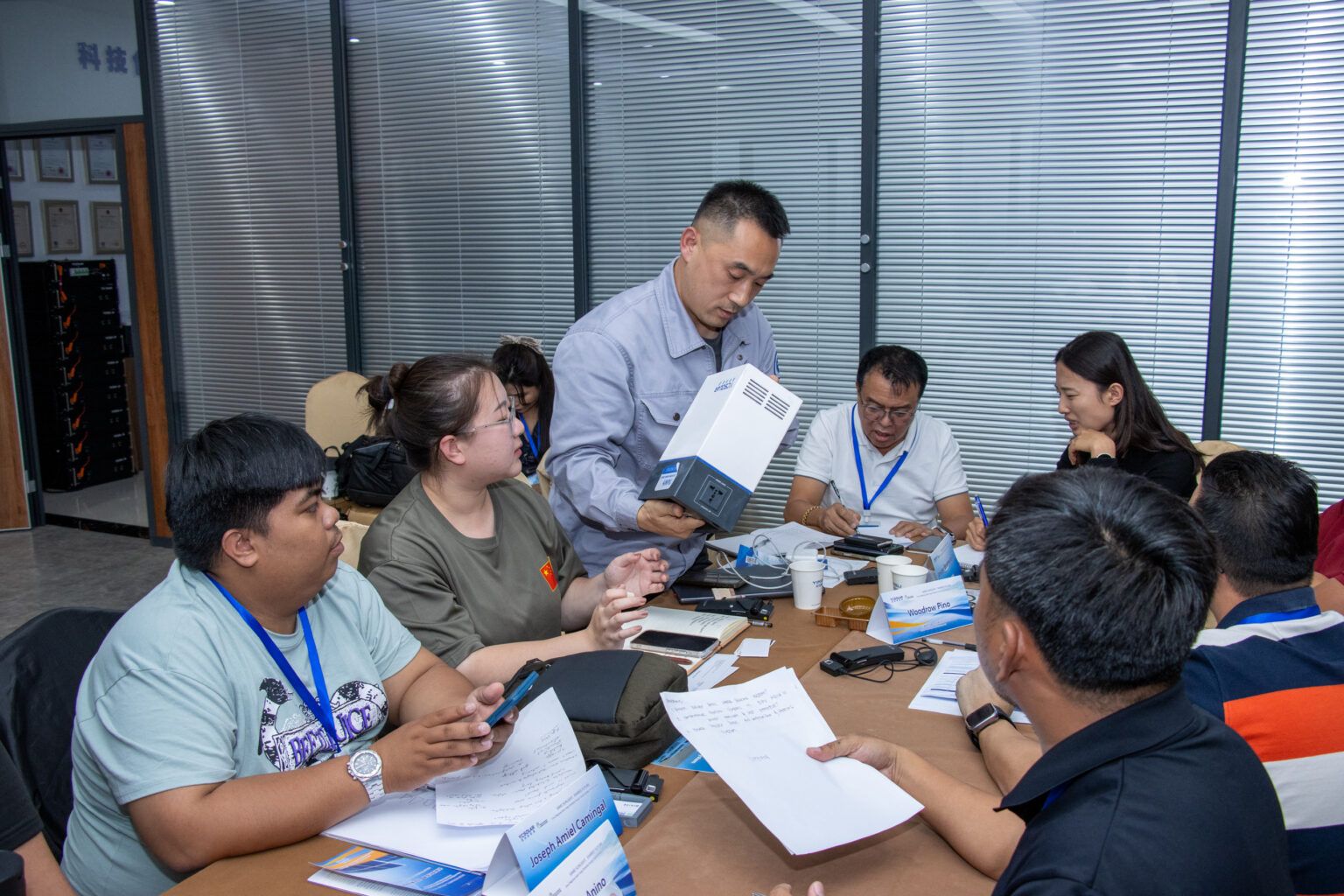
The Solar Photovoltaic (PV) Workshop, organized by New Energy Nexus in partnership with the People of Asia for Climate Solutions (PACS).
“The activity [PV workshop] was an invaluable opportunity to strengthen our local partners’ technical knowledge while building bridges for future cooperation in the renewable energy sector,” said Brenda Valerio, Program Director of New Energy Nexus Philippines.
The visit also contributes to the development of the Project Opportunity Map, CARE’s main output that identifies opportunities for collaboration between Chinese renewable energy enterprises and Philippine stakeholders.
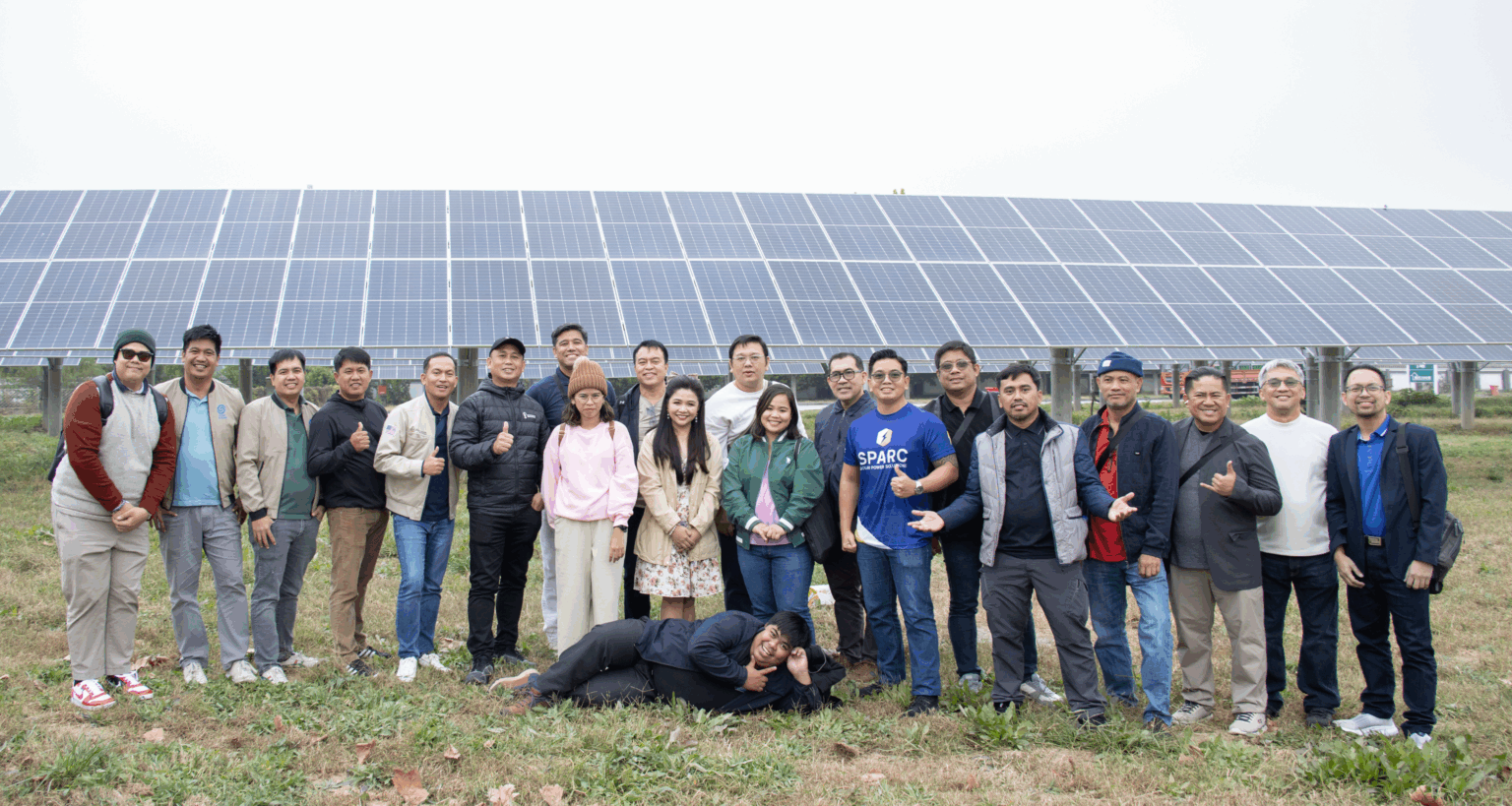
Participants of the Solar Photovoltaic (PV) Workshop, organized by New Energy Nexus in partnership with the People of Asia for Climate Solutions (PACS).
The Filipino delegation was composed of New Energy Academy solar training partners and Solar Innovation Program alumni who have been instrumental in expanding the country’s clean energy workforce and promoting solar innovation.
“This experience reflects our ongoing commitment to empowering our training partners and alumni with global perspectives and technical expertise. Learning from one of the world’s most advanced solar markets, we hope that these technologies and insights can be adopted and made available in the Philippines, helping our local solar industry champions continue to grow and evolve,” said Jacob Taguinod, Partnerships Manager of New Energy Nexus Philippines.
“The PV workshop in China was inspiring, humbling, and deeply encouraging. It showed us how passionate entrepreneurs can unite around a shared vision for renewable innovation and how advanced PV technology has already become, from solar benches to zero-carbon housing.”
These experiences are critical stepping stones that have bolstered our resolve. They encourage us (solar installers) to push beyond mere profit and focus instead on ambitious advocacy. Having seen these advanced solutions realized in practice, we now know the future we envision for our country is not a distant concept, but a tangible reality we can immediately begin to implement,” said Richmond Reyes, President of EcoSolutions Philippines.
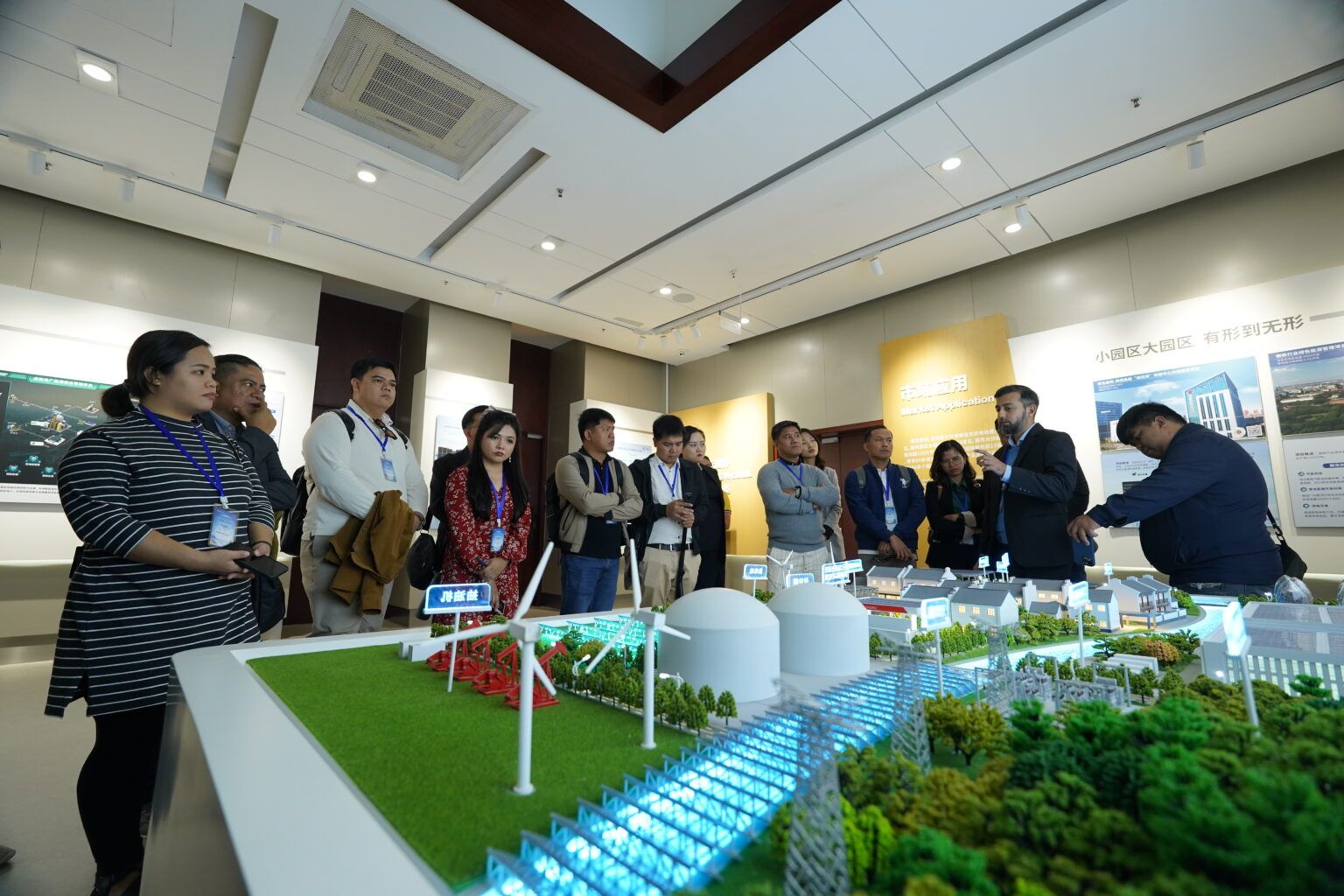
The Solar Photovoltaic (PV) Workshop, organized by New Energy Nexus in partnership with the People of Asia for Climate Solutions (PACS).
Through the CARE Project and initiatives such as the PV Workshop, New Energy Nexus continues to advance cross-border knowledge sharing and support solar entrepreneurs to contribute to advancing the country’s renewable energy market.
The Climate Actions in Renewable Energy (CARE) Project is a strategic initiative led by New Energy Nexus (Philippines and China) in partnership with People of Asia for Climate Solutions (PACS). It aims to foster cross-border collaboration in clean energy deployment by supporting Chinese enterprises in navigating the Philippine renewable energy market and promoting knowledge exchange between both countries.
Dayther Manubag
Communications Lead, New Energy Nexus Philippines
dayther.manubag@newenergynexus.com
(Based in Mandaluyong City)
Written by Jie Xiao, Country Director at New Energy Nexus China
I’ve just come back from three of the world’s biggest climate gatherings — New York Climate Week, Bangkok Climate Action Week, and Shanghai Climate Week — and one thing is crystal clear: the center of gravity in the global energy transition has shifted decisively to Asia. Everywhere I went, the same figures echoed: half of the world’s electricity is already consumed in this region, with Southeast Asia on course to account for 25% of global energy demand growth between now and 2035. The question is no longer whether Asia will lead the energy transition, but how.
And here’s the problem. Much of the conversation still focuses on supply and demand — China providing the technology and capital, Southeast Asia absorbing and applying it — rather than on what they can build together. That picture is badly outdated.
If Asia is to decarbonise at the speed required, this relationship must become a partnership of ecosystems, not just markets. What I saw across these climate weeks was the urgent need for entrepreneurship, collaboration, and shared innovation, not simply more shipments of solar panels across borders.
Asia already sits at the centre of this shift. Southeast Asia’s electricity demand is surging, growing nearly twice as fast as the global average. If these countries choose to lock in new fossil infrastructure, the world loses. If they leapfrog straight to clean energy, the world wins.
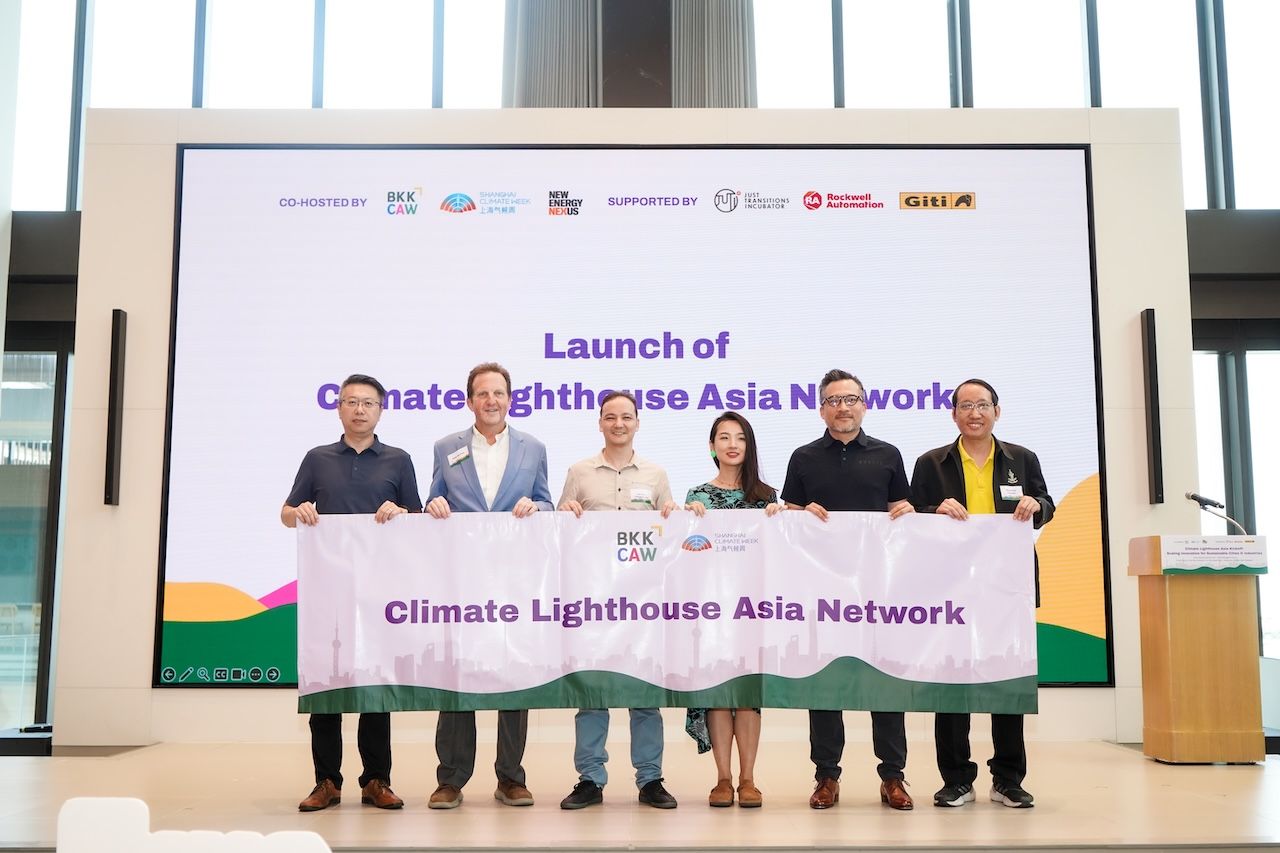
From left: Jason Dong, Executive Director of the Shanghai Climate Week Climate Lighthouse Professional Committee; Peter du Pont, Board Member at New Energy Nexus; Leo Horn-Phathanothai, Founder & Convenor of Bangkok Climate Action Week; Jie Xiao, General Manager of New Energy Nexus China; Ian Shih, Member of the Shanghai Climate Week Executive Committee, and International Advisor to the UNITAR Prosperity Alliance (Shanghai); and Dr. Manaswee Arayasiri, Sanitary Engineer at the Bangkok Metropolitan Administration.
That is why the relationship between China and Southeast Asia is so pivotal. What the climate weeks in Bangkok and Shanghai showed me is that Southeast Asia is not a passive recipient, but a laboratory for innovation. Local entrepreneurs are building new business models: rooftop solar sold on installment plans, mini-grids designed for island communities, efficiency solutions adapted to local commercial buildings.
And yet, the connective tissue between China’s and Southeast Asia’s clean energy innovation ecosystems remains thin. Chinese companies bring unmatched scale, capital, and supply-chain sophistication. But too many still see Southeast Asia as another export market due to limited understanding of local markets and policies, rather than a partner in co-creation. On the other side, Southeast Asian startups are inventive but often under-capitalised, locked out of manufacturing scale, and slowed by fragmented regulation. Both sides would benefit from deeper integration: shared accelerators, joint venture funds, mutual performance guarantees, and training exchanges that allow ideas to flow in both directions.
One moment in Bangkok captured what cross-border collaboration can look like in practice. At an event co-hosted by organisers of Shanghai and Bangkok Climate Weeks with New Energy Nexus China, we saw Chinese and Thai innovators meet not as exporters and buyers, but as partners in the clean energy transition. Corporates like TCL, LONGi, and Saint-Gobain showed how they’re digitalising factories and decarbonising supply chains, while startups such as Brick Technology, i2Cool, and Thailand’s Altotech shared solutions for smart, energy-efficient buildings. In that exchange, a new ecosystem took shape — built on trust, shared learning, and the belief that Asia’s net-zero future will be co-created, not imported.
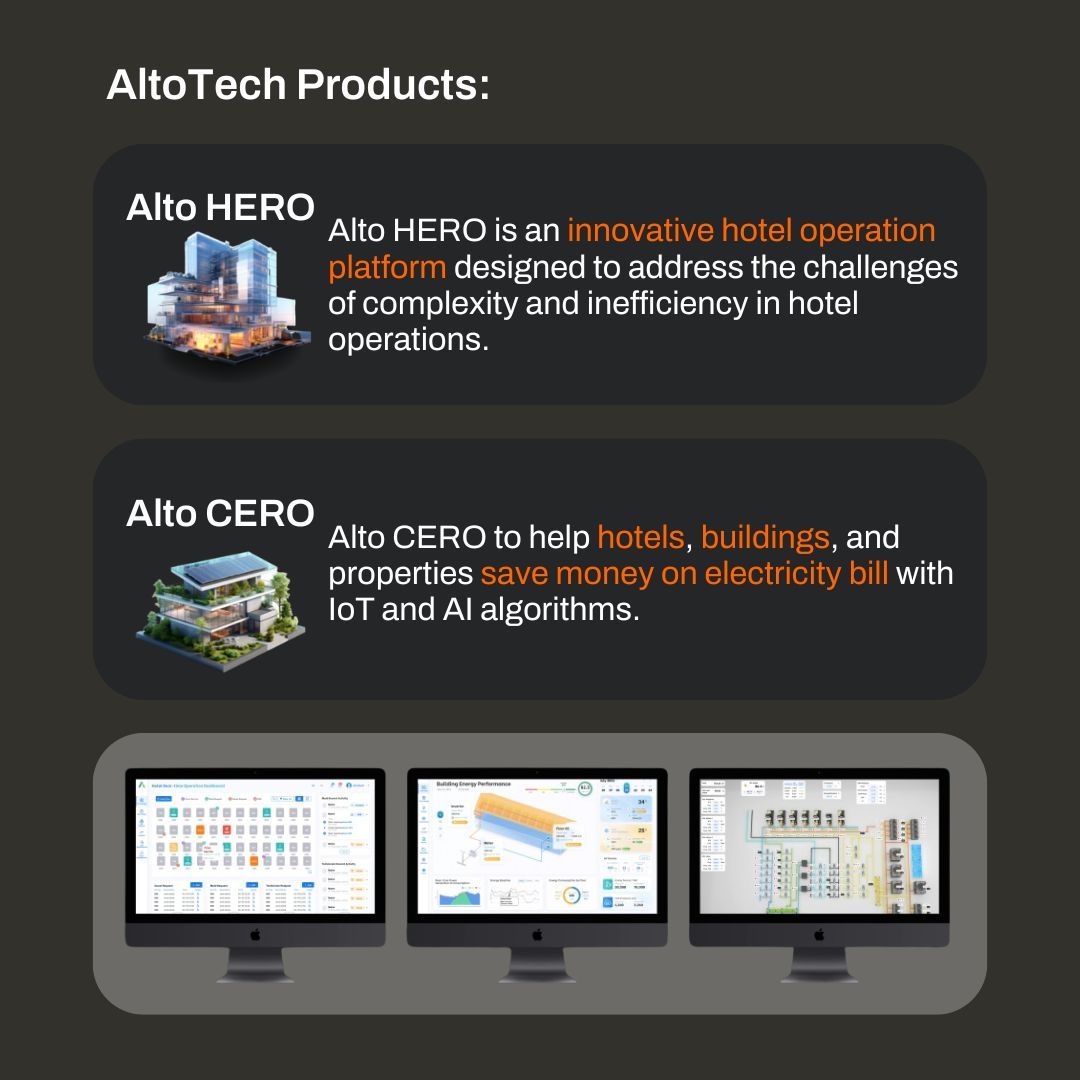
Altotech (Bangkok) provides an integrated AIOT energy management platform for building cooling and air-conditioning system management. It automates building management all in one place, reducing electricity cost by potentially 20-30%. Altotech participated in our Smart Energy Hackathon, Smart Energy Accelerator, the Decarbonize Thailand Sandbox, as well as the NEX COP28 Climate Tech Startup Accelerator.
What struck me most after these three climate weeks is how stark the choice is. Asia can double down on a transactional model — hardware shipped one way, demand absorbed the other — or it can step up to build a genuine partnership of entrepreneurs and innovators. The former may look efficient, but it risks a brittle transition that cannot withstand shocks. The latter is harder, messier, slower to start. But it is the only way to build the resilient and adaptive clean energy systems that can carry half the world’s population into a decarbonised future.
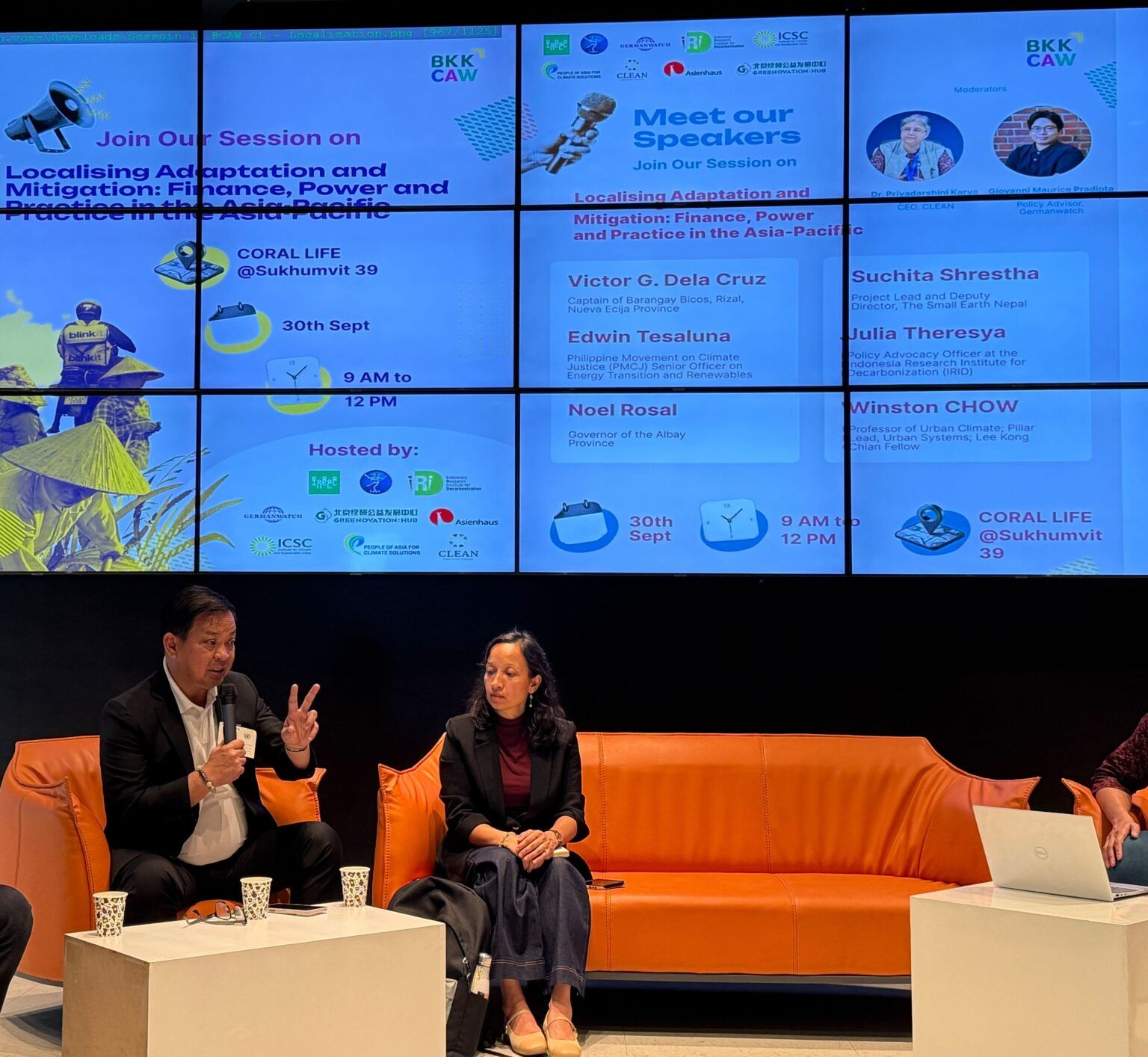
Noel Rosal, Governor of Albay Province, Philippines, at Bangkok Climate Action Week 2025, discusses how local communities and institutions across the Asia Pacific are driving climate adaptation and mitigation through finance, leadership, and practical solutions.
China has much to gain from this shift: opening new markets, diversifying demand, and learning from the hard realities of diverse Southeast Asian geographies. Southwest Asia, in turn, gains access to proven technology and capital, while embedding its own innovators in global supply chains. This is not dependency; it is mutual advantage.
What New York Climate Week – with its big names and Western donors – offered was the view from the top: big finance, global politics, systemic frameworks. But it was Bangkok and Shanghai that offered the view from the ground: dynamic, entrepreneurial, urgent. If we want this to be the Asian decade of climate leadership, that is where our focus must be.
The lesson is simple. Southeast Asia’s clean-tech future will be built on ecosystems of entrepreneurs, investors and innovators working across borders, taking risks together, and co-creating solutions suited to the region’s realities. That was the palpable change I felt in Bangkok and Shanghai, and it is the change we must now scale.
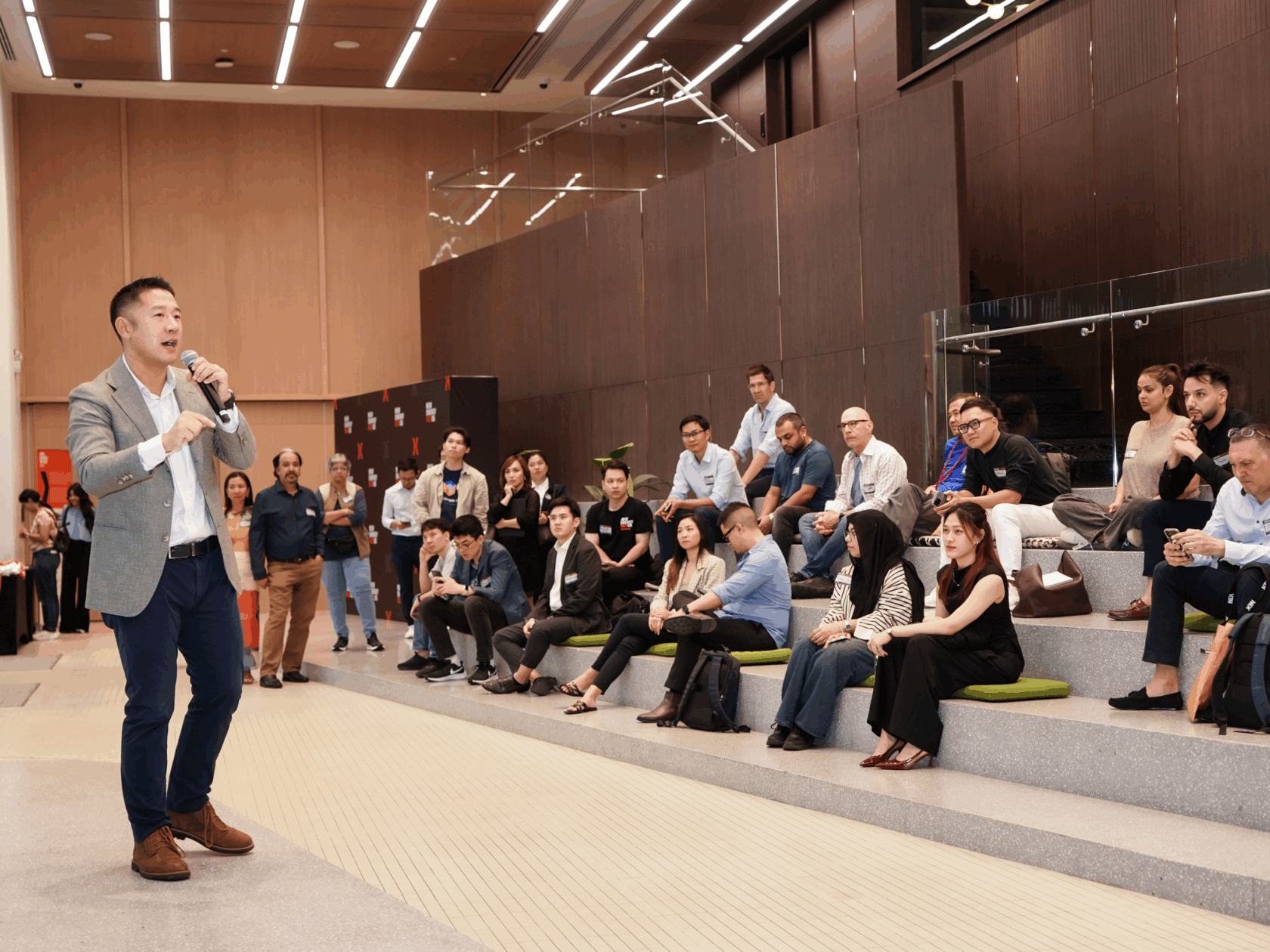
New Energy Nexus CEO Andrew Chang talks about three emerging themes he observed at Bangkok Climate Action Week, during The NEX Gigawatt event on October 2, 2025.
The clean energy transition is well underway, and nowhere is this clearer than in Asia. From China’s record-breaking renewable capacity to Pakistan’s fast-growing solar movement, this side of the Pacific is setting the pace for the global shift.
But as the region races toward Net Zero, one thing is clear: solutions are needed faster than ever, and collaboration among leaders and innovators will determine how quickly we get there.
With this urgency in mind, New Energy Nexus convened leaders, entrepreneurs, and investors from across Asia-Pacific at the first-ever Bangkok Climate Action Week – spotlighting the people and partnerships at the forefront of this transition.
“This is an incredible time for New Energy Nexus to represent the chapters, the solutions that are happening on the ground,” said Andrew Chang, CEO at New Energy Nexus.
From the week’s panels and startup pitches, Andrew observed three emerging themes: each a driving force toward Asia’s clean energy future.
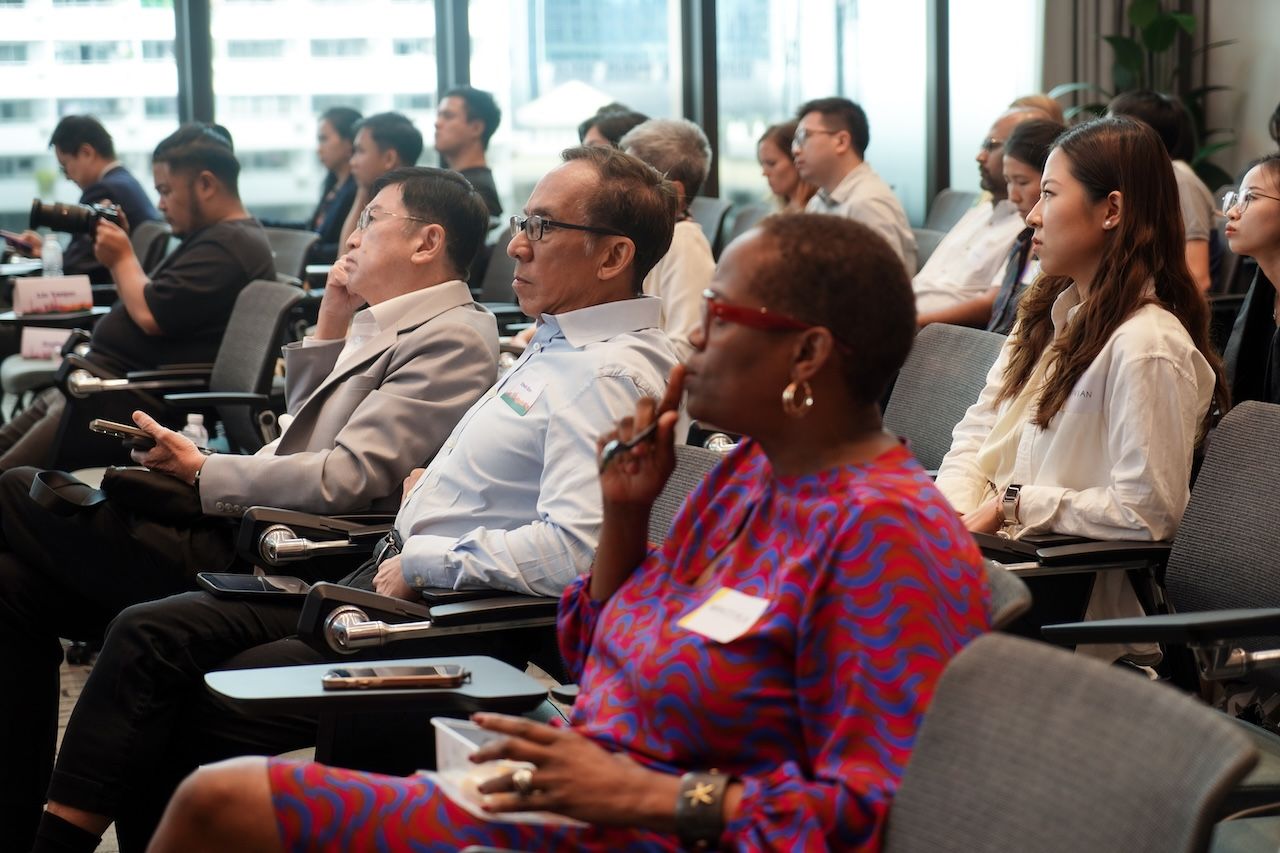
Attendees listen intently to a talk during the Climate Lighthouse Asia Kickoff event on September 29, 2025.
“Convergence of technology, convergence of people, convergence of collaborators all across the board.” — Andrew Chang
In a region separated by the sea but bound by shared challenges, no country should face the clean energy transition alone. Convergence can usher in progress faster and together.
This narrative shaped the discussion at Climate Lighthouse Asia Kickoff: Scaling Innovation for Sustainable Cities & Industries, where leaders from Shanghai and Bangkok came together to demonstrate what cross-border collaboration can do for the region’s energy transition.
The session highlighted end-to-end decarbonization, showcasing clean energy tech from East and Southeast Asia, and calling for stronger ecosystems supporting Asia’s innovators.
“I think [Shanghai and Bangkok] share a sense that the energy transition is not something that any city or country can achieve on its own. It only makes sense if you look at the challenge regionally and come together to address this together.” — Leo Horn-Phathanothai, Founder & Convenor of Bangkok Climate Action Week and Founder & Executive Director at Just Transition Incubator
New Energy Nexus China General Manager Jie Xiao highlighted how events like these generate opportunities for intersectional collaboration:
“We brought the whole Shanghai Climate Week crew, including founders, big corporates, and small startups, to Thailand to share best practices on green supply chains, industrial parks, and green buildings.”
For startups like i2Cool, a Hong Kong-based venture developing electricity-free cooling solutions, this convergence opens doors to scale their impact.
“From building sectors to the industrial sectors, they all suffer from the heat problem. That’s why we need the cross-border collaboration… so that [our] technology can be well applied in different parts of the world.” — Martin Zhu, CEO and Co-founder of i2Cool
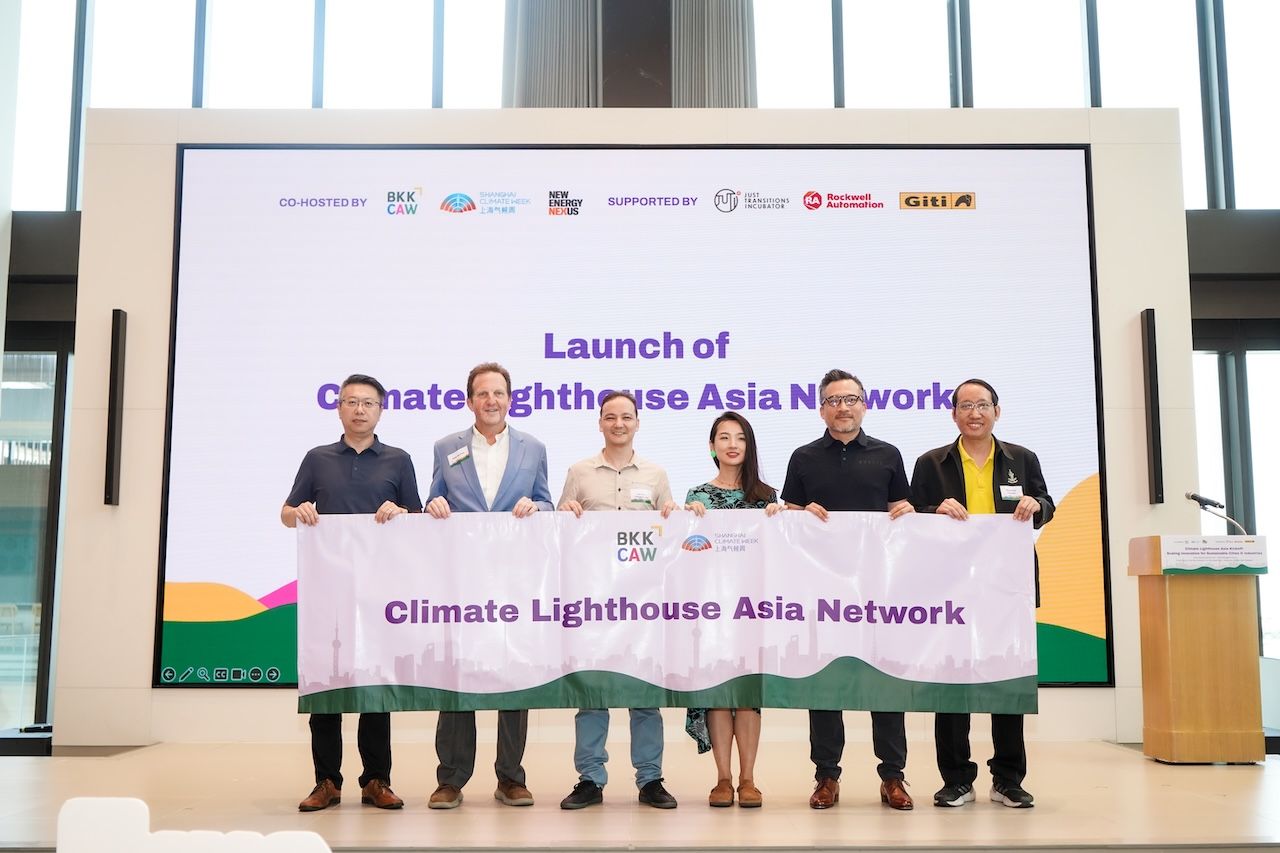
From left: Jason Dong, Executive Director of the Shanghai Climate Week Climate Lighthouse Professional Committee; Peter du Pont, Board Member at New Energy Nexus; Leo Horn-Phathanothai, Founder & Convenor of Bangkok Climate Action Week; Jie Xiao, General Manager of New Energy Nexus China; Ian Shih, Member of the Shanghai Climate Week Executive Committee, and International Advisor to the UNITAR Prosperity Alliance (Shanghai); and Dr. Manaswee Arayasiri, Sanitary Engineer at the Bangkok Metropolitan Administration.
“Being pragmatic, and understanding… who’s our audience, the communities that we want to support, making sure our solutions can connect with them.” — Andrew Chang
Clean energy capacity growth is already outpacing fossil fuels, but ensuring a just, equitable transition requires more than breaking records. It demands pragmatism, a focus on solutions that work on all fronts: policy, economics, and for people.
At Small Money, Big Change: Catalysing Solutions for a People-Centric Energy Transition, co-hosted by New Energy Nexus, AVPN, and The Global Energy Alliance for People and Planet (GEAPP), speakers emphasized that financing, inclusion, and agency are just as crucial as innovation.
“When we think about people-centric [energy transition], the word that comes to mind is agency… We really need to be thinking about what resources are already there in these communities and what they’re already doing to help champion for themselves.” — Natasha Allen, Southeast Asia Programme Expert at the Alliance for Rural Electrification
“The lack of knowledge, lack of awareness… makes it difficult for people to really invest in this. Energy workers actually need the reskilling and upskilling in order [for us] to support them, and to be included in the future workforce planning.” — Patrick Yeung, Director, Climate Action at AVPN
“We talk about carbon, investment, communities… but in the end, that is all to make sure all the people are benefiting from the energy transition – by getting affordable access to clean energy,” — Lucky Nurrahmat, Indonesia Country Lead at GEAPP
The discussion reinforced a simple truth: the clean energy transition relies on hard decisions rooted in the lived realities of local communities. Pragmatism isn’t just a buzzword; it’s an approach that will shape how quickly and fairly the transition occurs.
For more on how clean energy can be realistic while centering communities, read New Energy Nexus China’s casebook, Small Money, Big Change: A Casebook on Rural Revitalization through PV Poverty Alleviation, Village-owned Wind Power Projects, and Youth and Women Empowerment.
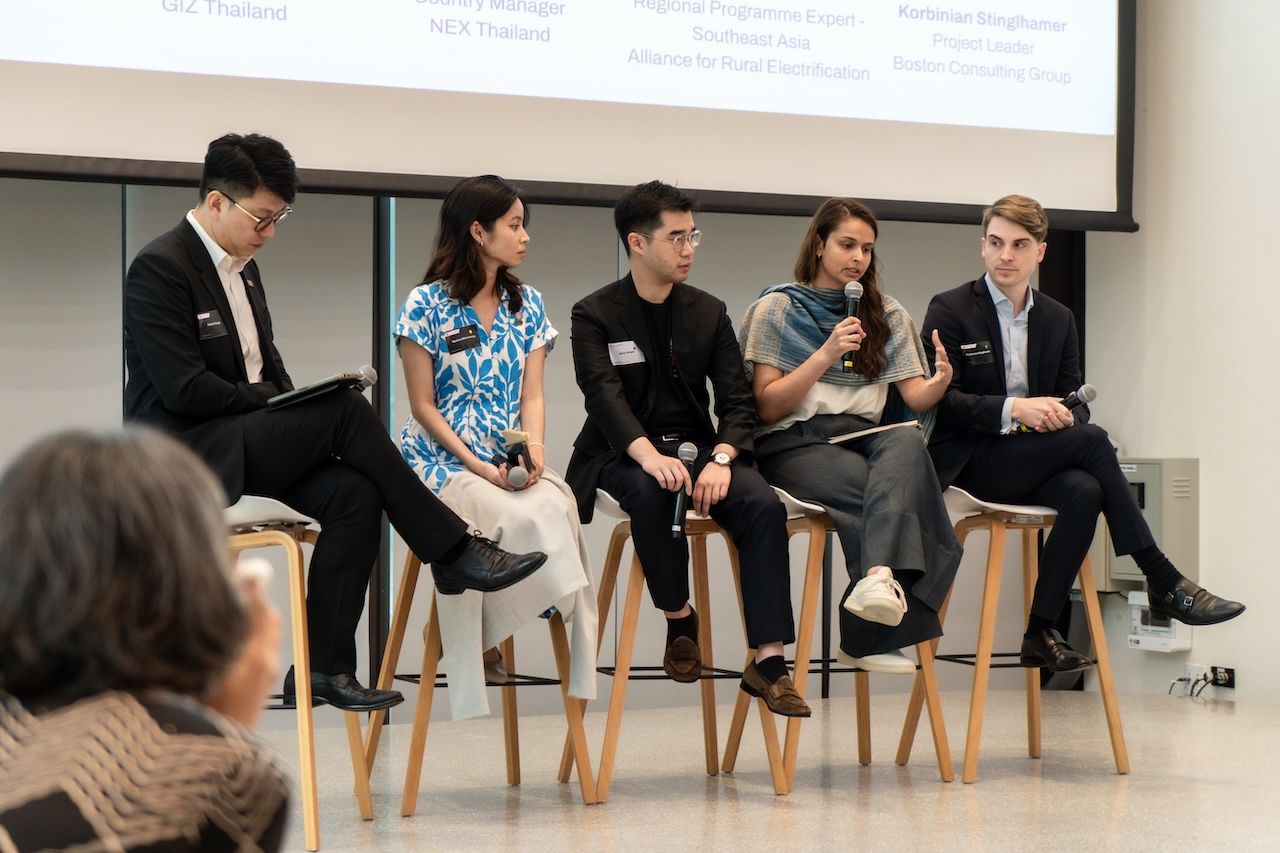
From left: Patrick Yeung, Director, Climate Action at AVPN; Warisa Sihirunwong, Regional Project Advisor for the Clean, Affordable and Secure Energy Programme, GIZ; Jirapat Horesaengchai, Country Manager at New Energy Nexus Thailand; Natasha Allen, Southeast Asia Programme Expert at the Alliance for Rural Electrification; and Korbinian Stinglhamer, Project Leader at Boston Consulting Group.
“Last one is people power… People science is just as important as technology science.” — Andrew Chang
At our last event, The NEX Gigawatt: Tapping into ASEAN’s Clean Energy Innovation Ecosystem, people power took center stage.
Entrepreneurs from Vietnam and Thailand showcased breakthrough clean energy solutions, ranging from sand batteries to AI-driven energy management, and grounded in the realities of their own countries and communities.
A highlight of the session was a panel featuring New Energy Nexus leaders from Thailand, Indonesia, the Philippines, Vietnam, China, Supercharge Australia (our collaboration with EnergyLab), and NEX Ventures (a venture fund based in Singapore). Each shared how their local ecosystems are empowering entrepreneurs to drive the clean energy shift.
“New Energy Nexus is unique to have chapters and people on the ground, building these relationships, deploying these technologies, supporting entrepreneurs,” Andrew said. “That’s our superpower.”
From the Philippines, Country Director Brenda Valerio reflected on how people-centered approaches unlock scale:
“New Energy Nexus in the Philippines is creating an ecosystem for different stakeholders, particularly startups and clean energy enterprises. We’re supporting early-stage clean energy startups and micro, small, and medium enterprises (MSMEs) that are working on climate and clean energy.”
In Thailand, Country Manager Jirapat Horesaengchai added:
“The role of New Energy Nexus Thailand is to facilitate the whole process of different stakeholders coming together… and grow the ecosystem for clean energy entrepreneurs.”
The event also bore witness to the solar energy revolution in Pakistan through the lens of industry leader Renewables First. The company is partnering with New Energy Nexus to back the next generation of clean energy innovators in the country. (Find out more about our joint program, Climate Innovation Pakistan, here.)
Together, these voices underscored that true transformation starts with people: founders, workers, and communities co-creating solutions that work in their local contexts and ripple outward across the region.
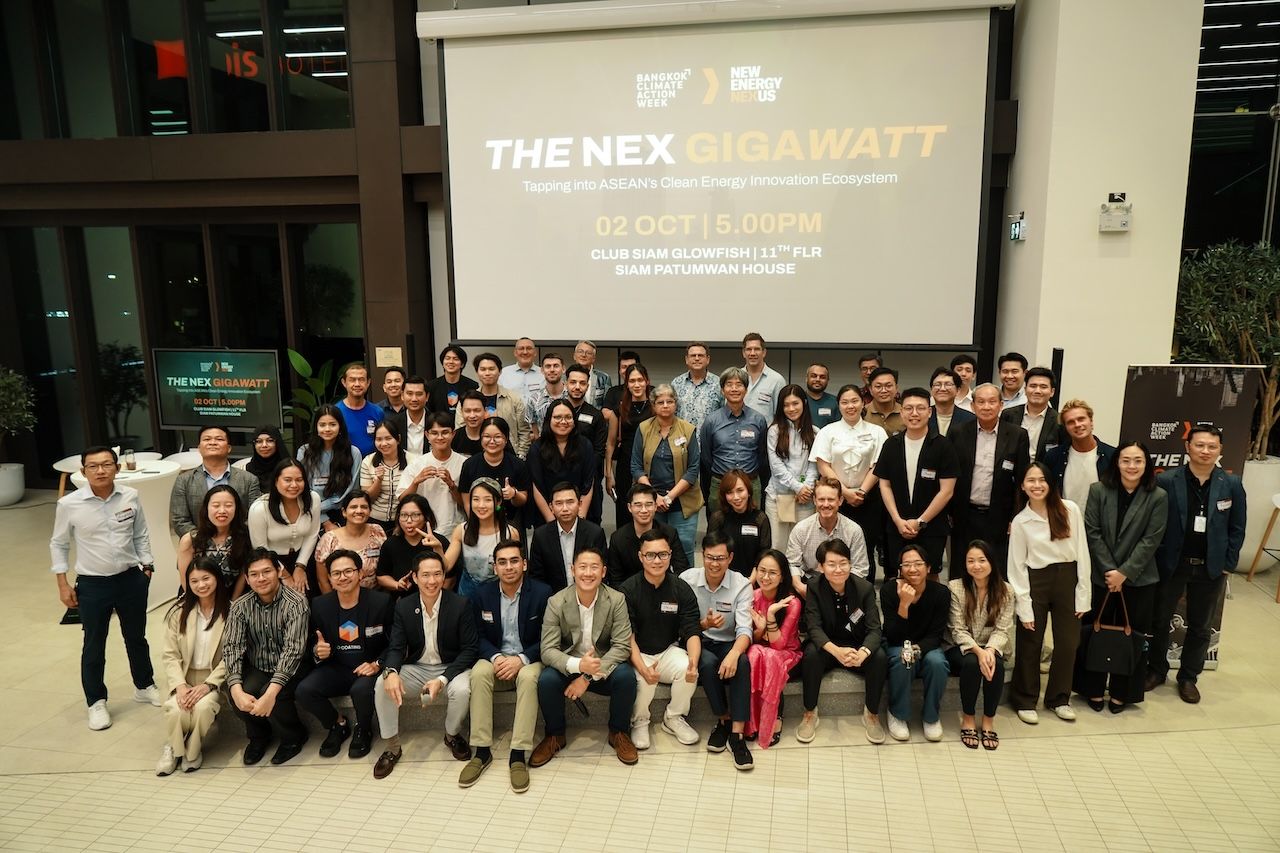
Speakers, panelists, and attendees of The NEX Gigawatt event.
Across Asia and beyond, clean energy entrepreneurs are redefining what’s possible. At New Energy Nexus, we’ve not only seen this happen – we’re greasing the wheels on their progress.
For over 20 years now, we’ve supported over 10,000 of these entrepreneurs, helping them turn big ideas into real impact through capital, training, and partnerships.
The insights from Bangkok Climate Action Week are more than talking points and takeaways. They form a roadmap for how to fast-track the transition, and where clean energy innovators come in. When they are empowered to connect across borders, engineer solutions according to people’s needs, and lead from the ground up, they can spark change that scales far beyond their own localities.
In backing their success, New Energy Nexus is not just supporting startups – we’re charting a course towards 100% clean energy for 100% of the population.
Want to get involved? Check out our programs here, and get first dibs on clean energy opportunities when you sign up for our newsletter.
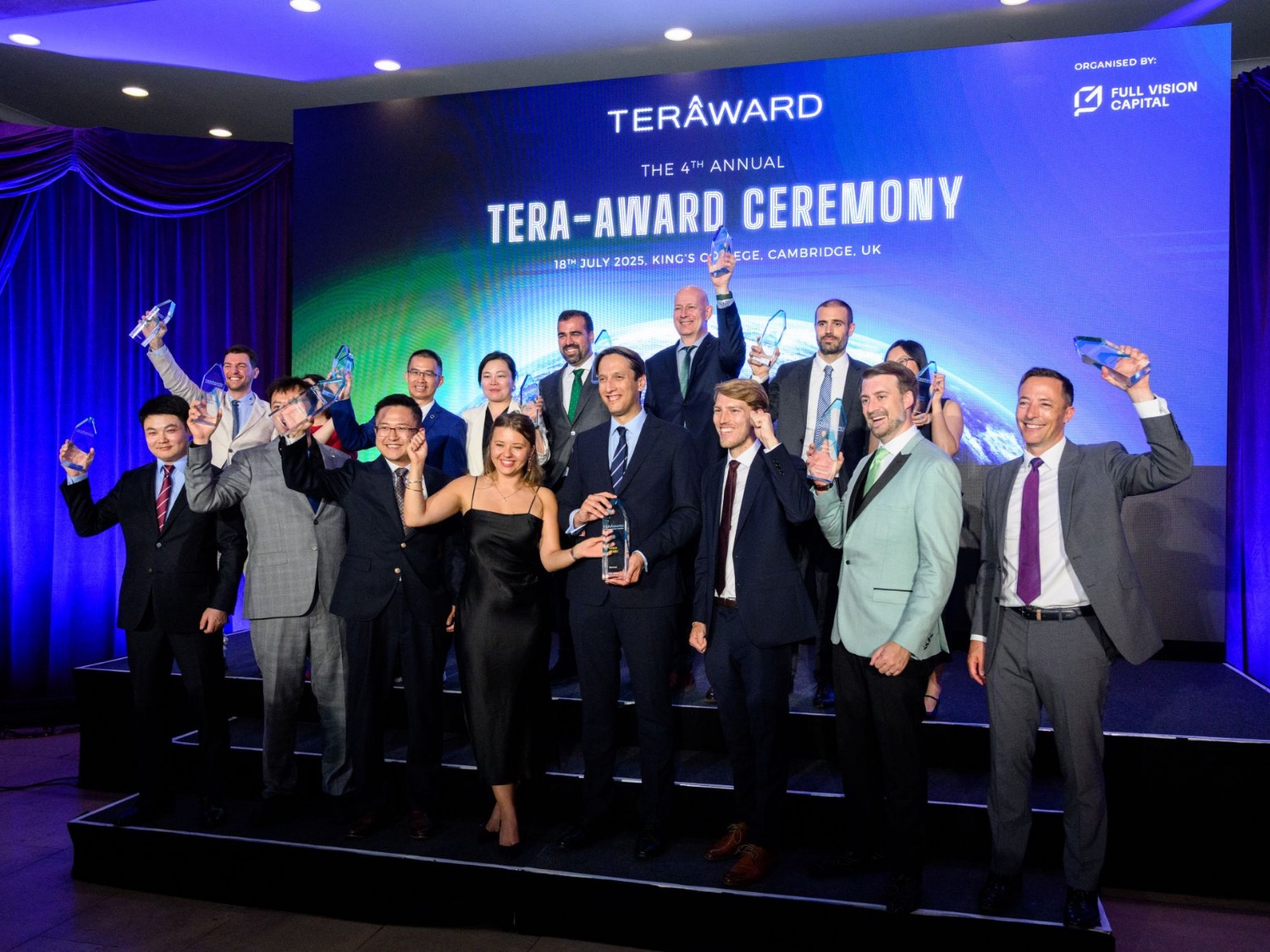
Photo from TERA-Award
The effects of climate change are becoming harder to ignore, from extreme weather to rising energy demands. But alongside these challenges is a powerful opportunity to rethink how the world is powered.
Around the world, entrepreneurs are creating clean technologies that cut pollution, protect communities, and open new pathways for sustainable growth. To turn this wave of climate innovation into lasting change, we need to spotlight the startups driving it and give them the tools and connections they need to scale.
That is where the TERA-Award plays a vital role. Now in its fourth edition, the platform provides promising climate technologies with the spotlight, connections, and funding they need to grow faster and reach more people.
This year, New Energy Nexus China helped bring some of the best ideas to the table. Out of a record-breaking 785 entries, nine of the 28 finalists were startups we recommended – including the 1st, 2nd, and 3rd place winners, plus five Merit Award recipients. Together, they took home over US$1.15 million in prizes and, more importantly, the resources and networks to turn their solutions into global impact.
Barocal is transforming cooling and heating by replacing harmful refrigerant gases with solid-state materials. Developed over 15 years at the University of Cambridge, the technology delivers higher efficiency, lower costs, and lower emissions, tackling major environmental challenges head-on.
Its retrofit-friendly design integrates seamlessly into existing infrastructure, making it easier for industries to adopt greener, more cost-effective systems.
“Build better products, not just greener ones… If you can offer solutions that are cheaper, smaller, faster, or more flexible and more sustainable, you’re in business.” – Florian Schabus, CCO
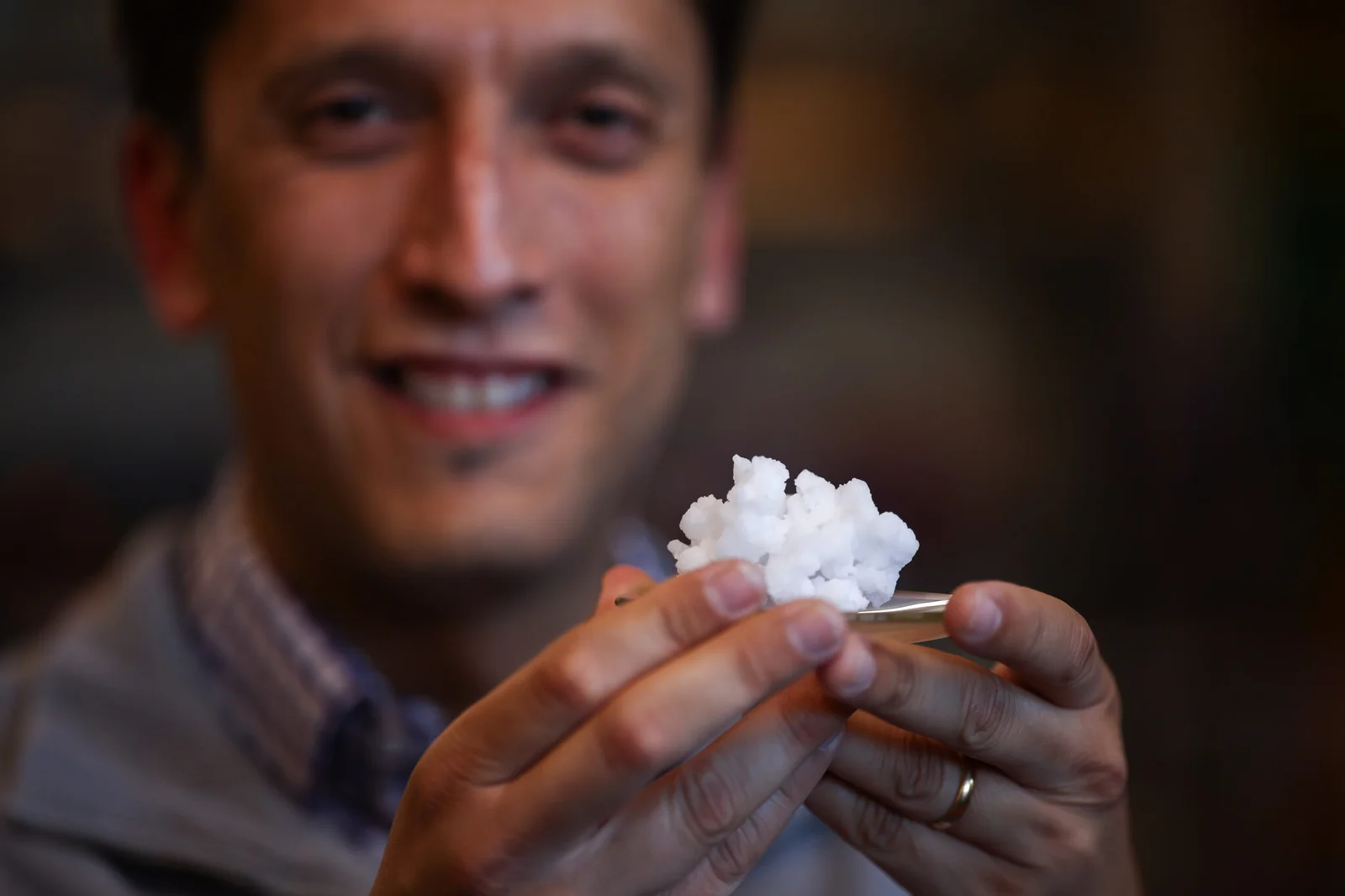
Photo from Barocal
Feon Energy is reinventing battery electrolytes with novel molecules that make batteries safer, more powerful, and more energy-dense – without raising costs or disrupting manufacturing. Its drop-in technology is proving itself today in high-performance markets such as drones and UAVs, and is already being developed with partners in electric vehicles and energy storage systems.
With the potential to boost energy density by 50% while cutting lithium use by up to 40%, Feon is accelerating adoption across the battery industry and building trust through real-world validation and long-term collaboration.
“For the first time in human history, we have the tools to engineer our environment and our planet’s future, not just adapt to it… The impact you create can shape the world for generations to come.” – Wenxiao Huang, CEO and co-founder
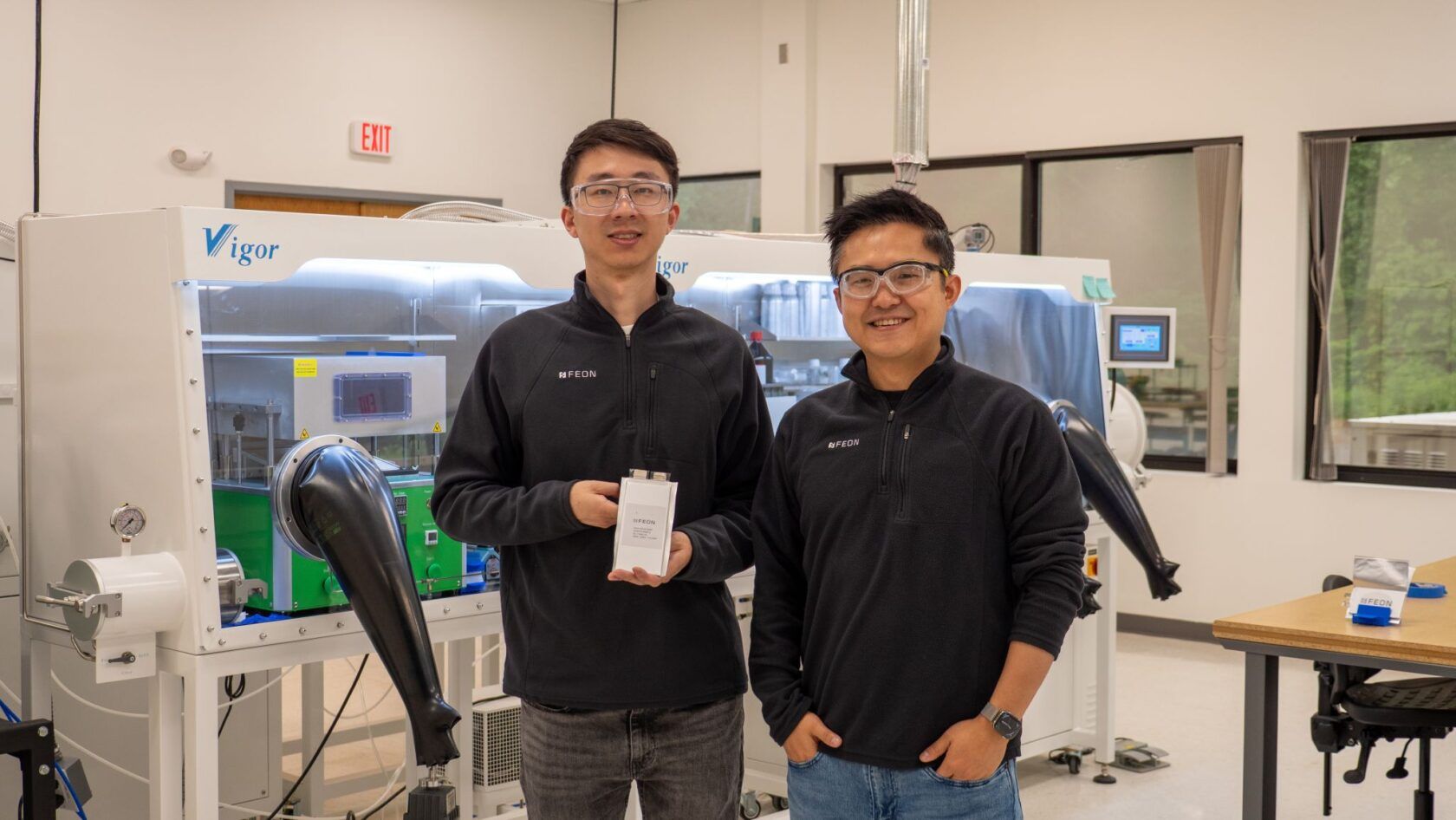
Photo from Feon Energy
Syzygy Plasmonics uses a plasmonic photocatalyst to drive chemical reactions with light instead of heat from combustion. Their NovaSAF platform transforms biogas from landfills or dairy farms into sustainable aviation fuel, tackling emissions from both waste and air travel.
Highly energy-efficient and made from low-cost materials, the technology offers an accessible and scalable path to decarbonizing aviation, while unlocking value from underused resources.
“Expect that things won’t work immediately and you will have to try again and again… If you do not give up and you do not get discouraged, eventually you will find success.” – Trevor Best, CEO
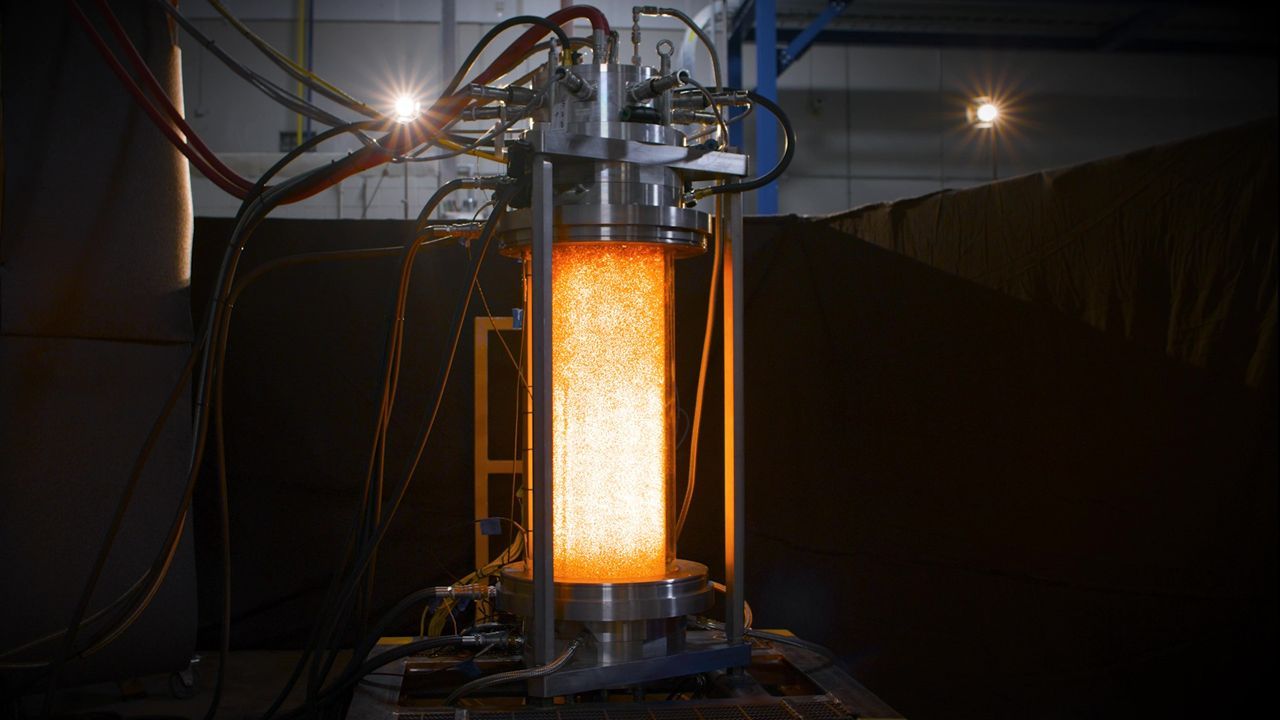
Photo from Syzygy Plasmonics
Beyond the podium finishers, five out of 11 Merit Awardees were also recommended by New Energy Nexus China:
For three years, New Energy Nexus China has partnered with the TERA-Award to connect it with our global network, promote the competition, and help bring advanced green energy solutions to market. This year, the startups that won through our pipeline did not only bring home huge prizes – they’ve proven that when entrepreneurs get the right support, their ideas can reach the global stage and have a far greater impact than where they started.
At New Energy Nexus, we build ecosystems that help climate tech entrepreneurs thrive. That means giving them access to mentorship, funding, technical expertise, and markets where their solutions can make a difference. With entrepreneurs like TERA-Award leading the way, backed by our programs across the world, we’re fast-tracking the shift to 100% clean energy for all.
Ready to unlock your own startup’s potential? Find out how we can support you here.
July 16, 2024 – New Energy Nexus announces today the appointment of Jie Xiao as the new General Manager of China. Jie succeeds Andrew Chang, who has been promoted to Chief Growth Officer in the global team.
In 2016, Andrew launched New Energy Nexus’ operations in China and under his leadership, the team built accelerators, incubation and advisory services for clean energy startups and initiated commercial partnerships with key ecosystem partners such as Energy Internet and Research Institute, Tsinghua University (EIRI) and LG Energy Solutions. His relentless efforts empowered startups, driving their success and established New Energy Nexus as a key player in China’s clean energy innovation space.

Jie Xiao, General Manager of NEX China
As the new General Manager of China, Jie Xiao brings a wealth of experience in the environmental, social and governance (“ESG”) and innovation sector.
“I am excited to lead our team in China and expand our partnerships with key players across China’s clean energy landscape. Together, we’ll advance New Energy Nexus’ mission of empowering clean energy entrepreneurs and implementing our ‘China In, China Out’ strategy,” said Jie Xiao.
Jie Xiao began her career in finance and banking for multinational corporations, and later served as Secretary-General for the Shanghai United Foundation, founding CEO of Brilliance Camp, and Chief Growth Officer for CBi China. With over a decade of leadership experience, Jie excels in maximizing ESG outcomes through innovative partnerships and navigating complex landscapes.
“Jie Xiao brings a diverse and inclusive perspective that is crucial for our continued impact in addressing climate change. With her at the helm, I am excited to take on the new role of Chief Growth Officer and contribute to our global strategy, particularly in exploring new international opportunities,” said Andrew Chang.
“New Energy Nexus’ first operations outside of California started in China, and since then Andrew has taken the chapter from strength to strength. His drive and strategic vision will be critical in his new role, as we look to expand our impact in new markets, and build new partnerships around the world,” said Danny Kennedy, CEO at New Energy Nexus.
“With Jie’s international perspective and unique set of skills across the sustainability and innovation sector, I am confident in our continued growth and impact in China – a country that is the very engine of the global clean energy transition.”
About New Energy Nexus
New Energy Nexus (NEX) is an international organization that strives towards a 100% clean energy economy for 100% of the population. It does this with a laser focus on diverse entrepreneurs, supporting them with the accelerators, funds, skills, and networks they need to thrive.
NEX has accelerated over 1,200 startups, supported nearly 9,000 entrepreneurs, and mobilized over US$3.7 billion in investment. Celebrating 20 years since its founding in California in 2004, NEX now operates programs or advisory services in: Australia, China, India, Indonesia, Nigeria, Pakistan, Philippines, Thailand, UAE, Uganda, USA (California and New York), and Vietnam.
Tristan Tremschnig
tristan.tremschnig@newenergynexus.com
Global Communications Director, New Energy Nexus (based in San Francisco)
Jasper Shen
jasper.shen@newenergynexus.com
Marketing Director, New Energy Nexus China (based in Shanghai)
June 4, 2024 – New Energy Nexus is supporting LG Energy Solution’s launch of its fourth Battery Challenge, a global startup competition to discover and support innovative early-stage startups to develop next-generation battery technologies.
The Battery Challenge is LG Energy Solution’s mainstay open innovation initiative. While helping the growth of the distinguished companies, LG Energy Solution also aims to pioneer next-generation technologies through partnerships.
As the manager and facilitator of this program, New Energy Nexus is supporting overall operation.
This year’s Battery Challenge is recruiting early-stage battery startups in: battery materials, battery management system, battery manufacturing and quality control, battery maintenance, battery recycling and reuse technology, smart factory solutions, and newly added metal sourcing, as well as ‘New to LG’. The new category called ‘New to LG’ has been established to encourage participants to explore various novel energy-related ideas, not necessarily linked to batteries.
The winners will be selected through comprehensive business plan evaluations, in-depth interviews, and technology verification, and will receive up to US$30,000, an increase of US$10,000 from the previous program. Awardees will also be reviewed by LG Energy Solution for potential investment.
New Energy Nexus is uniquely positioned in sectors and regions critical in the global battery supply chain. Our “Just Batteries” initiative aims to build an interconnected ecosystem to support a more inclusive and resilient battery sector. In the past ten years, we have operated seven programs across five countries or regions globally. We aim to build more equity into the battery supply chain – wealth, social benefits, jobs, among others – for all regions of the world that will benefit from this growing industry.
“At New Energy Nexus, we are dedicated to not only growing the EV industry but also accelerating the development of integrating cutting-edge battery solutions into the broader energy ecosystem. By collaborating with LG Energy Solution, we aim to drive global advancements in battery technology, support the adoption of EVs, and ensure a sustainable and resilient clean energy future.” said Andrew Chang of New Energy Nexus, who manages the global partnership with LG Energy Solution.
The Battery Challenge 2024 application window is from June 4 to June 30. For more information and to apply, please visit
www.lgesbatterychallenge2024.com
About New Energy Nexus
New Energy Nexus (NEX) is an international organization that strives towards a 100% clean energy economy for 100% of the population. It does this with a laser focus on diverse entrepreneurs, supporting them with the accelerators, funds, skills, and networks they need to thrive.
NEX has accelerated over 1,200 startups, supported nearly 9,000 entrepreneurs, and mobilized over US$3.7 billion in investment. Celebrating 20 years since its founding in California in 2004, NEX now operates programs or advisory services in: Australia, China, India, Indonesia, Nigeria, Pakistan, Philippines, Thailand, UAE, Uganda, USA (California and New York), and Vietnam.
Tristan Tremschnig
tristan.tremschnig@newenergynexus.com
Global Communications Director, New Energy Nexus (based in San Francisco)
Jasper Shen
jasper.shen@newenergynexus.com
Marketing Director, New Energy Nexus China (based in Shanghai)